
Rocky Hes' "A Model's Guide: How to get Started in New York"
by: Phillip Wong
fotos: Phillip Wong
Verve People
August 2025
Rocky Hes’
A Model’s Guide – How to get Started in New York
Step by Step Knowledge
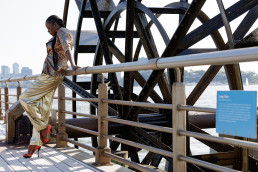
For aspiring models seeking a reliable roadmap into the competitive world of modeling, guidance from experienced professionals can prove invaluable. Rocky Hes’ recently released book, “A Model’s Guide,” stands among such resources, offering practical advice and insights tailored to both newcomers and those wishing to refine their craft. Among resources, Hes’ straightforward approach, blends motivation with actionable instruction.
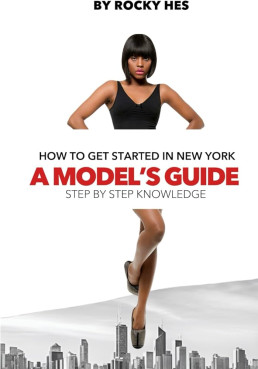

When Rocky Hes launched her book, “A Model’s Guide – How to Get Started in New York,” she had a panel of models, agents, scouts, stylists, photographers, both on her panel and among the select audience. Among those in the audience were a few models who we asked their thoughts, as the girls and women (and boys and men) who would be impacted by a guide into their industry.
The Hes book is a very good foundation for how to approach it systematically.
Comprehensive Foundation:
- “A Model’s Guide” provides readers with a thorough overview of the modeling industry, demystifying the path from first steps to professional success.
- The book balances realism with encouragement, outlining opportunities but also common pitfalls and misconceptions.
- It serves as a reference that models can revisit at different stages of their careers, adapting its guidance as their experience grows.
Industry-Relevant Advice:
- Rocky Hes draws from personal experience and industry standards to detail the expectations placed on models—from maintaining professional relationships to handling castings and portfolio development.
- The book emphasizes the importance of persistence, resilience, and adaptability, all essential for success in a field known for its challenges and rapid changes.
One of the models we spoke with: Gabrielle Li Navarro, “found the ‘step by step’ guide . . . highlighting the important aspects of modeling,” was helpful. “Ms. Rocky Hes, a role Model I didn’t know I needed,” she says.
Practical Tools and Techniques:
- Readers find actionable tips on building and maintaining a strong portfolio, including what types of photos to include, and how to present oneself to agencies and clients.
- Hes provides checklists, sample resumes, and advice on attending castings, auditions, and photo shoots, ensuring models can approach opportunities with confidence and professionalism.
- A section on self-care and work-life balance underscores the importance of health—mental, physical, and emotional—when pursuing a modeling career.
Two sections, on “Research and Networking, and another on Legal and Financial Considerations,” drew the attention of Navarro, one of a few models who attended the launch, “due to the importance of financial literacy.”

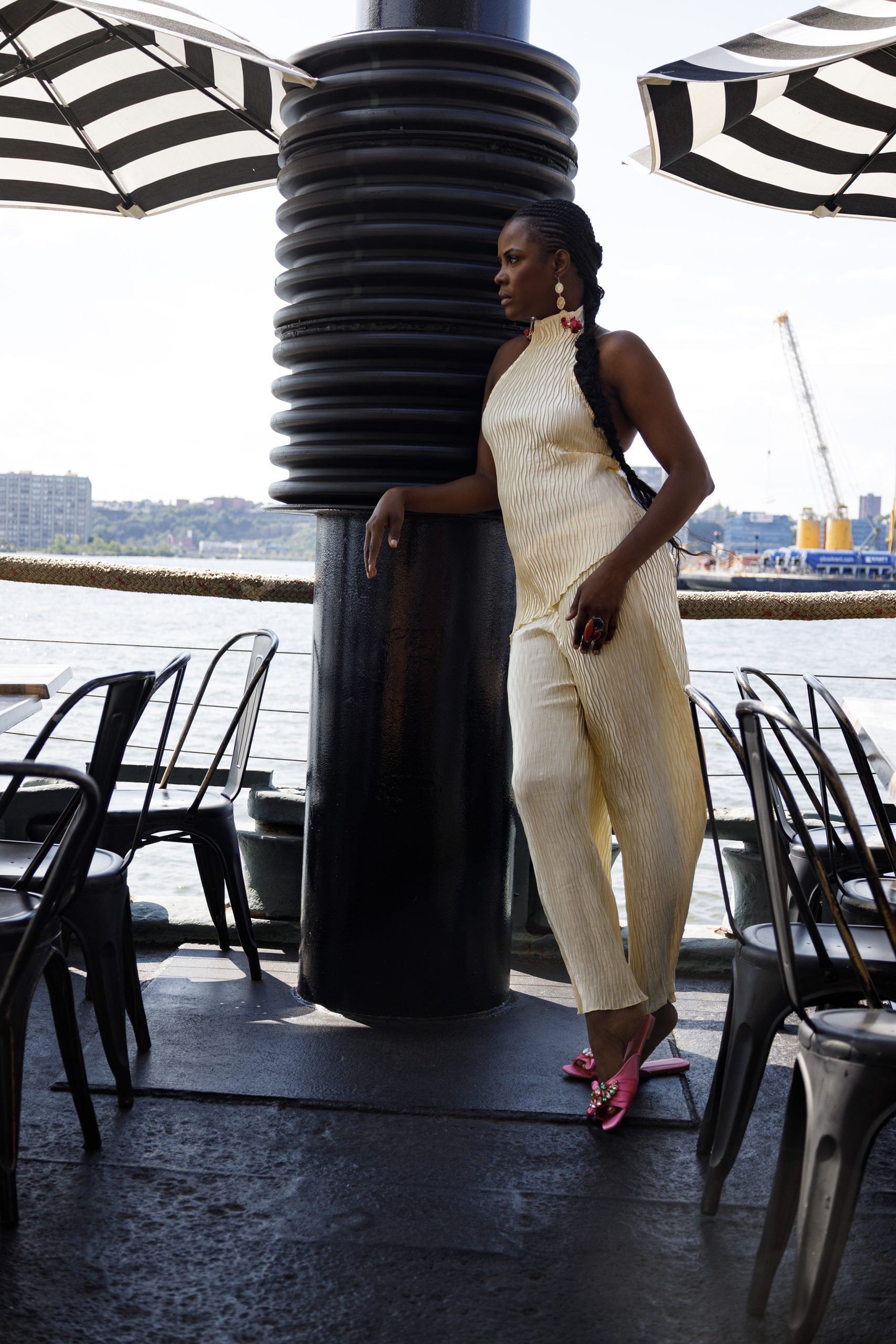

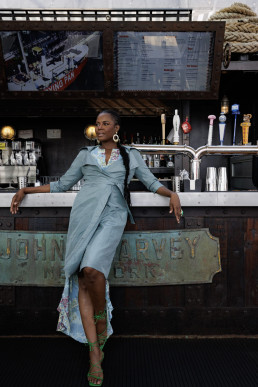
Navigating the Business Side:
- The book instructs models on understanding contracts, rates, and negotiations, arming them with the knowledge to advocate for themselves and avoid exploitation.
- Information about reputable agencies, red flags in the industry, and the process of finding legitimate representation helps readers make informed choices.
Modeling, like some other industries, needs to take people when they are young, and like other potential career paths, put them to test, and work, to find out whether they have the will, the discipline, the willingness to work, but unlike other paths: learning musical instruments, gymnastics, team sports, the modeling industry doesn’t have many organized paths (or guides) helping to move them forward. Young models are often left on their own to “figure it out.” Without guidance, it becomes a road filled with “trial and error” situations.
Another model we met, Delyn Saffa, said: “walking into a whole new world, can be nerve-racking . . . knowledge within the industry is the level this book will elevate you to.”“This guide,” Saffa said, “gives you insight on what to expect, what to avoid, where to look, and when to say “no.”
Personal Branding and Self-Confidence:
- The book encourages models to develop a unique personal brand, understanding how to stand out in a competitive environment without sacrificing authenticity.
- Exercises and anecdotes illustrate methods for building self-confidence and coping with rejection, an inevitable part of the modeling journey.
“I admire Rocky’s devotion to uplifting the next generation of fine models, especially women of color.” Saffa muses, reflecting on her own experiences, “We face more challenges in the industry, and hearing and seeing the testimonies of successful models who have overcome the trials and tribulations is the eye-opening hope we all yearn for.”
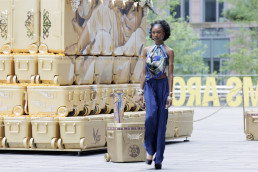
Continuous Learning:
- Rocky Hes advocates for ongoing education—whether learning new poses, studying fashion trends, or taking workshops—to remain relevant and competitive.
- Models are urged to seek feedback, invest in their skills, and remain open to growth and adaptation.
“A Model’s Guide” by Rocky Hes is a valuable companion for anyone pursuing a career in modeling. Through its blend of industry insights, practical tools, and motivational support, the book equips readers with the knowledge and confidence to thrive. Whether one is just starting out or looking to elevate their career, Hes’ guide offers clear instruction, actionable strategies, and the encouragement needed to navigate the modeling industry’s unique challenges.
Delyn Saffa applauds “A Model’s Guide, by saying “The dedication that Rocky has to spreading knowledge and testimonies to fellow models is inspiring in itself. We celebrate a strong, intellectual Black woman who doesn’t gatekeep but opens the gates-and that woman is our Rocky.”
Ironically, while the public view of the modeling industry is that of “pretty faces and bodies,” the essential core to success, is a strong discipline, and understanding of yourself. It is critical for young people to both be able to follow direction, but also understand when, and how, to say: “No,” as Saffa points out.
The opportunities of seeing many places in the world, and being exposed to many experiences, is an unusual attraction for many, and Rocky Hes’ book, allows newcomers to consider their options. In many ways, it’s a guide to Life.
Rocky Hes styled by: DaNisha Greene/ Assistant: Delyn Saffa
White two piece pants and top - Ayeakah, shoes - Pierre Phillip
Red peasant blouse - Ayeakah, embroidered shorts - Le Catou, shoes - Tory Burch
Blue trench coach - Max Mara, floral dress - BCBG Max Azaria, shoes - Zara
Gold blazer and pants - Le Catou, shoes - Christian Soriano
Green loose blouse - Tobi, Shimmer pants - Finesse, shoe - Zara
White top - H&M, Embellished skirt - English Rose, shoes - Pierre Phillip

Make up provided for, and done by MAC Cosmetics and MAC team: Gabby, Justyna and Sabine
Skin Prep: Fix Plus Original & Fix Plus Stay Over Spray, Natural Radiance Primer, Fast Response Eye Cream, Hyper Real Serumizer, Fix Plus Original and Fix Plus Stay Over Spray
Concealers: Studio Fix 24 hour concealer: in shades NC48, NC55, NC58, NW45, NW47, NC55, Pro Longwear Concealer in NW40 and NC50, Pro Face Palette Contour
Foundation: Studio Fix Fluid in NC58, NC55, NW45 and NW47, Pro set and blur loose powder in shade: Dark, Blush: Raizin, Mineralize skinfinish Powder Dark Deep (Bronzer), Studio Fix Powder in C55
Cheeks: Strobe Cream Bronzelite, Glow Play Cream Blush “Pinch of Marrakesh”, Mineralize Blush “Hey Coral Hey”
Eyes: Pro Longwear paint pot: Soft Ochre, “Contemplative State”, Eyeshadows: Natural Wilderness and Embark, “Saddle” and “What Clout!”, Kajal liner in “extreme black”, 24 hour brush stroke liner “Brushblack”, Mac Stack Lash Primer and Mascara,
Brows: Brow Pencil in Spiked, Brow Gel in Stud, Onyx Brow Gel
Lips: Coffee, Chestnut and Nightmoth Liners, Glow Play Lip Balm “Introvert” and “Candid”, Macximal Matte Lipstick “Taupe”, Clear Lipglass

The State of the Fashion Industry - New York 2025
by: Phillip Wong
fotos: Phillip Wong
Verve Opinion – Industry
August 2025
Verve Fashion Magazine has been committed to the Art and Commerce of Fashion.
This is the first in a series of articles focusing on the Rise, the Fall, and the ReEmergence of Fashion, Art and Creativity in the Heart of America:
New York City
The State of the Fashion Industry
New York 2025

Challenges, Opportunities, and the Quest to Reclaim American Fashion Leadership
New York City, long celebrated as a fashion capital, stands at a crossroads in 2025. As the industry faces the relentless march of globalization, digital disruption, and shifting consumer values, American designers, production houses, educational institutions, and the myriad of industries, driving the industry, and riding the coattails of it, are grappling with the formidable challenge of staying relevant and competitive on a global stage.
The question of whether it is worthwhile for America to bring fashion production and design back to the United States is no longer rhetorical—it is urgent, nuanced, and deeply consequential.
The Pulse of New York’s Fashion Industry in 2025
Once synonymous with Seventh Avenue’s Garment District and the glamour of New York Fashion Week, New York’s fashion ecosystem has evolved into a complex tapestry. Major designers, headlining at NYFW, coexist with a burgeoning scene of independent brands, sustainable labels, and digital-first startups.
Fashion shows, and the photographs and videos generated from the shows, serve to create the “marketing” that brands need to reach a local, national, and global audience. But in media universe with shrinking universal reach, and social media platforms that give the “reach” potential to everyone, but each brand has to do it themselves, deserving brands have fallen by the wayside.



Critical Areas in the Fashion Industry:
Infrastructure
– Sourcing, skilled labor, energy, supplies, shipping, logistics, security are all areas that need support, not from every company, because few start-ups or businesses in an industry that can’t “redefine” their price point, or market, every year, can build their own infrastructure for a product line that isn’t producing to compete with the infrastructure provided by other countries.
Real Estate
– Most businesses need stability in either their production facilities, or their sales spaces. Or both. New York rents make it extremely difficult for any company to project a year of rent, and be able to cover their operating costs.
Financing
– Which makes sense for any industry (instead of solely for the investors). Financing follows different timelines. Farmers struggle, because they can’t produce, and sell crops, any faster than nature allows them too. They can have some crops that harvest faster, but not all of them can follow that timeline – so they rotate crops. Other industries, including fashion, follow a different timeline than tech manufacturing, software production, Artificial Intelligence, or Quantum computing. So the financing has different demands.
Labor
– Sewing and construction of garments can be easy or difficult. Skilled labor takes several years of training, experience and work. As our industry leaves, there is less work, less money, more difficulty in returning. America is uniquely positioned to build industries across a diverse economy. As long as people around the world, want to come to America and see a future, there will always be people without background, education or language skills, who seek possibilities in raising families and creating newer generations beyond their own limitations. But if these kinds of industries aren’t nourished and protected, they will go to other countries. We define “developing countries” as countries without resources, but “developing countries” have also proven to be countries with misaligned priorities and use of resources.
Marketing
– Because of the explosion of “big money” in hyping and marketing “tech industries,” marketing focuses on “viral” or “explosive” results. Few people in the fashion industry have the resources to both build their product line, AND build their marketing structure concurrently. There ARE entities that produce platforms for marketing, but most are small, fleeting, and the big ones, are lured by the high dollar potential of their perceived market (people who have the resources to spend millions on clothes).




Designers: Creativity Amidst Constraints
American designers are celebrated for their innovation, yet in 2025, they are pressed as never before. Competing against global giants, especially fast fashion behemoths from Asia and Europe, designers face intense price competition and shrinking margins. The pressure to constantly release new collections—to feed the social media-driven appetite for novelty—can be overwhelming.
Moreover, the talent drain to cities like Paris, Milan, and Shanghai is real. New York must work harder to attract and retain visionary designers who might otherwise find greater opportunities abroad.
Returning to the critical areas of industry development and growth that was mentioned earlier, big conglomerates and investment companies see the brand names of fashion and consumer products as “instantaneous income.” Investment companies believe that by “trimming costs,” or eliminating waste, will bring them (and the money of their investors) the Return on Investment (ROI) that they need to show. Even in technology, companies are investing in probable technologies that will show extraordinary returns within a decade.
But for any small business, and particularly businesses created and supported by the “sweat equity,” of start-up owners, most have no way of competing, and the timeline of growth, can be a generation or more (that is the history of Chanel, Gucci, Missoni, Prada, Louis Vuitton, but also for Volkswagon, Mercedes, Mitsubishi.
Who is willing to provide an environment of nourishing, or protecting the companies that will become the giants of the future? Throwing millions and billions into companies hoping to become Google or Meta or Apple, isn’t reasonable, and the growth of those kinds of companies stopped being innovation and became strategic alliances long ago.
Production in Fashion: Manufacturing and Marketing
In other parts of the world, financing for industries come from their governments, which sees a value in building or supporting the industry. Oil and gas industries have had this kind of funding for decades.Americans didn’t think that the Chinese apparel industry was built by capitalist start up funding to be able to dominate the global economy in clothing, fashion, and accessories. Once those production factories were built to scale, they needed markets, and that is where America’s consumer base was useful. The Chinese (and Eastern European) countries did manufacturing and appealed to luxury brand names to market for them. But factories didn’t stop manufacturing, simply because the brand’s contracted quantity was filled, by changing a design or look simply, but supporting Chinese design students and then sending them to Paris, London, Milan and New York to “intern” with the brands, they built industries that are formidable globally.
Like the Japanese and Korean industries before them, and the Vietnamese and Ecuadorian industries to come, the expanded this production techniques to electronics, automobiles, and are going into other industries.
Production of the marketing and sales of those produced products, fell on the global brands to find ways to introduce new products and brands to new (and existing) audiences.The use of magazines, were used by the established markets in Western Europe, the United States and the wealthy, who had the time and money to leisurely browse through the best and brightest, but social media, with it’s democratic reach, was the tool to reach everyone else.
Not well. Not necessarily effectively, but it is the tool to get brands and images in front of a large audience.


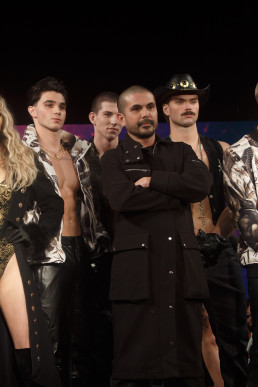
Marketing in Fashion
In the production of marketing, Erik Rosete, the founder of Art Hearts Fashion, began developing a platform for designers in 2011, became a producer of fashion shows which allowed small designers to be seen, while controlling costs by ganging up multiple designers in his shows: “We focus a lot on producing great events for them (the designers). And it’s really led to a movement and a community of a lot of designers that are collectively telling their story under one umbrella. It’s a collective of everyone’s story. And so it really features designers from all walks of life, from different parts of the world, from different aspects, from different, you know, whether it be kids or dogs, couture, body shaping, a little bit of everything.For many emerging designers, photos and videos from a runway show, on a professional model, becomes their sole means of marketing themselves on social media.
“Well, that’s part of being an inclusive platform that tells a complete story from daytime to nighttime, from birth to death, from youth to risque, from conservative to sexy.” Rosete says in defining some of the elements that allow him to produce shows.
His sponsors and audiences, he says, “They’re (looking for) different elements that provoke emotion. They provoke conversation. They provoke feelings. And, you know, again, it’s like you may not like to watch kids shows, but you can appreciate them. You may think that the tape shows too sexy, but you don’t have to watch it.”
In order for Art Hearts Fashion to be successful (and he’s proven to be so for 12 years), he has to be aware of what interests them (and who the sponsors want to put their products in front of, rather than have someone in a remote office, ordering him what to put in front of the audiences.
Fashion Schools: Educating for an Industry
Institutions like the Fashion Institute of Technology (FIT) and Parsons School of Design are recognized as world-class, but they find themselves having to adapt. To prepare students for the realities of 2025, curricula are being updated to include sustainability, supply chain management, digital design, and entrepreneurship.
However, fashion education is expensive, and many students graduate with significant debt. The challenge for schools is to remain accessible, relevant, and connected to the evolving industry—ensuring that graduates are not only creative but also equipped to thrive in a globalized world.
Erik Rosete’s Art Heart Fashion, is aware both of the costs, and the dreams of designers in fashion programs: “they spent their tuition on going to these universities to learn how to do this. Their dream is to see their garment at New York Fashion Week. And so, you know, many of them didn’t travel to New York, but that photo, that content is their dream. And it’s very powerful because they were all able to accomplish that through us.”
Rosete, when asked about his view of curating and uncovering the designs and brands he presents: “We want to be able to showcase a wide range of brands is rebellious because there are so many of these attitudes and these misconceptions that you have to follow a certain trend or a certain path. I love going against the grain and really making people speak even to provoke controversy is to provoke the power of what we’re doing. Make them talk, you know, let them talk.”
“And I do feel like a rebel” he continues,” because if I listen to the (monied) universe, I would be showing nuns on the runway and I would be showing boring clothing. I wouldn’t be supporting the crazy cool artists from all over the world. I would be following a path that’s force fed on me.”
“I refuse to do so because I know people want to see cool and sexy and fun fashion shows. I know they want to be able to see different types of models and different types of clothing. They don’t want to just get stuck into this, you know, one bubble or whether it be conservative or, you know, just this.”
As “money” has flowed into every industry, the search for “efficiency” has choked off innovation, creativity, discovery, and experimentation. There is less and less acceptance of anything that isn’t a “profit center.” The “risk” of investment, has become the “conformity” of investment. The absolute and sure placement of money, that has a “guaranteed” return.That culture is visible in all arts, and all society, but with recent elections, to government as well.
Rosete observes: “everyone’s been brainwashed to believe that you have to follow a certain rule book. But this is fashion. Fashion is about breaking the rules.
It’s about standing out. It’s about being unique and being able to tell your own story through what you wear. And what people forget is that people identify themselves through their fashion sometimes.



Obstacles to American Industry:
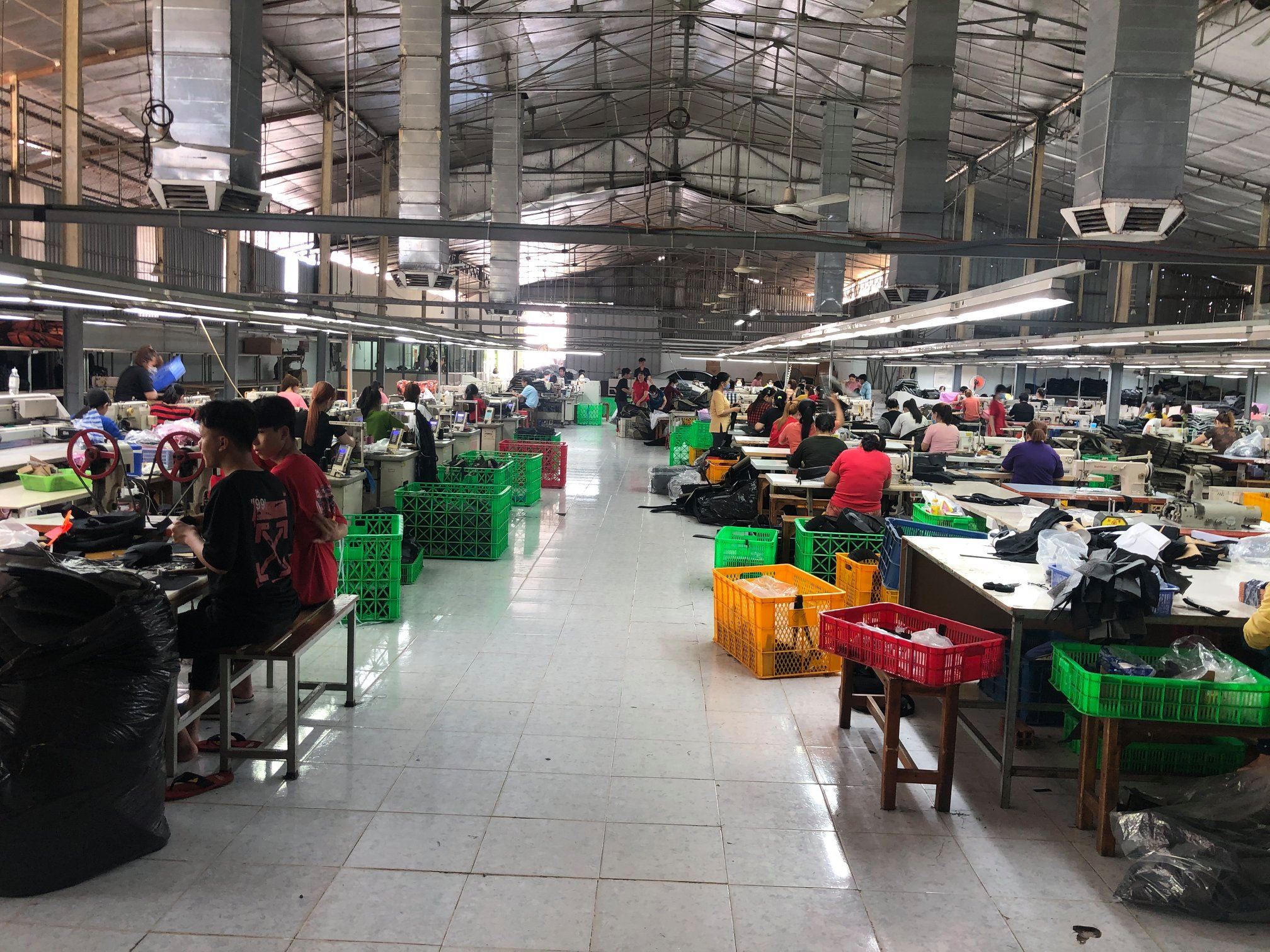
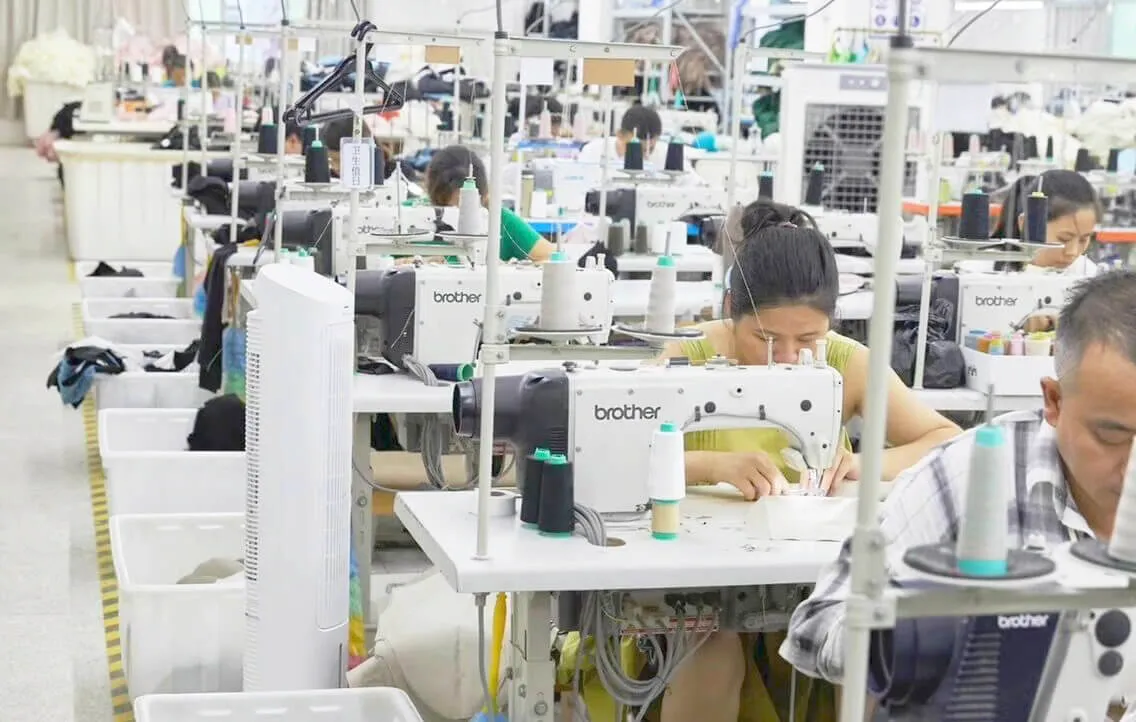
- Globalization and Outsourcing: The vast majority of clothing sold in America is manufactured overseas, where labor is cheaper and supply chains have been optimized for efficiency. The problem with simply chasing “cheap labor,” is that other developing countries are using the asset of “cheap labor,” to create a stable economy, with at least ONE sector, is able to be sustainable.
- While other industries can build from a stable economic sector, to ramping up sectors of toys, batteries, smart phones, electric cars, quantum computing, drones and arms. They do so with limited competition in each field – because the competition was culled by efficiencies. The fashion industry cannot force lack of choice onto consumers by simple “efficiency.” The more common a “style” or “look,” the more fleeting it is, and less likely it is to grow, but it also becomes limited by the perception of “sameness.”
- Rising Costs: The cost of labor, rent, and compliance with environmental and labor standards in New York is among the highest in the world, threatening the viability of domestic production. Fleeing the idea of compliance for an apparel market, without focusing on the regulation of rent (which is the HIGHEST cost, and cannot gain efficiency), is short-sighted.
- Supply Chain Disruptions: The post-pandemic world has seen persistent supply chain challenges, from shipping delays to shortages of textiles and trims, which disproportionately impact small producers and designers trying to keep manufacturing local.
- Technology and Digital Transformation: The rise of digital fashion, including virtual showrooms, 3D design tools, and the metaverse, is both an opportunity and a threat—demanding new skills and investments that not all players can afford.
Challenges for the Fashion Industry
Producers: Navigating Economic and Logistical Hurdles
For producers, creating fashion shows like Erik Rosete, the landscape is both inspiring and daunting. On one hand, there is a renewed interest in ‘Made in the USA’ labels, driven by consumer demand for ethical production and transparency. On the other, the infrastructure that once underpinned the Garment District has dwindled, and the cost of reestablishing facilities is steep.
Production companies manufacturing for a competitive and shifting market, must also balance the need for speed-to-market with quality and innovation. American manufacturing, if it hopes to compete, must offer more than just proximity—it must deliver on sustainability, advanced craftsmanship, and customization.
One group (marketing producers) can find other markets, the other group (manufacturing) rises and falls with the infrastructure invested in what they do.


Global Competition: The New Reality
Competition is fiercer than ever. Chinese and Southeast Asian manufacturers offer speed and scale at prices American factories struggle to match. European fashion houses wield centuries of heritage and branding power. The digital revolution has lowered barriers to entry, allowing new players from emerging markets to reach global audiences overnight.
In response, New York’s fashion community is seeking to differentiate itself through:
- Sustainability: Emphasizing environmentally conscious materials and practices, including upcycling, zero-waste design, and closed-loop manufacturing.
- Inclusivity and Diversity: Championing designers and models from a broad spectrum of backgrounds, expanding the narrative of American fashion.
- Innovation: Integrating technology into both design and production, from 3D printing to AI-driven trend forecasting.
Is It Worth Bringing Fashion Production Back to the United States?
The debate over reshoring fashion production is complex. The arguments in favor include:
- Shorter Lead Times: Proximity to the market allows for greater flexibility and responsiveness to trends.
- Job Creation: Reviving manufacturing could provide employment opportunities in cities where industrial jobs have disappeared. Along with the TYPE of jobs and industry.
- Quality Control: With tighter oversight, brands can better ensure ethical and sustainable practices.
- Brand Value: ‘Made in USA’ can carry a cachet that appeals to certain consumers, especially in the luxury and streetwear segments. Although, this Brand, will not have the value of luxury segment until a more significant craftsmanship is developed and recognized consistently.
- National/Local Political and Economic benefits: America faces an increasing schism between populations that are highly educated, but dependent on big corporations to hire them, and less educated population that struggles to find service jobs, or a dependency on government benefits. Large corporate interests may pay, but they won’t pay everyone, and they are looking to divest themselves of labor in all areas.Is it better to find ways for governments to invest in creating both a skilled labor forces for employment and social stability, rather than dealing with the government costs in the future?
- There are many industries that can thrive on diverse tastes and interests, but the production of fashion items, is something that doesn’t demand high cost start-ups, but they still need help.
However, the barriers are significant:
- High Costs: Labor and real estate costs make American-made goods more expensive, limiting their market share. But as with any industry, labor, is only expensive if the product is not worth the costs. Real estate costs in less expensive areas exist, but transportation for the labor market, doesn’t.
- Skill Gaps: The decline of domestic manufacturing means fewer skilled workers are available, and training takes time. In experience with items in the vintage market, the skill of production existed in the 1950s and 1960s. But the people who crafted the pieces most valued in vintage markets, were made by Jewish, Italian, and Irish immigrants. Current immigrants have a more difficult time apply skills already learned, to a marketplace that is substantially reduced.
- Scale: The massive production runs required by major retailers are still easier to achieve overseas.




Conclusion: A Strategic Reinvention
For New York—and, by extension, America—the future of fashion lies in strategic reinvention, not nostalgia. Rather than trying to replicate the past, the industry must leverage its strengths: creativity, diversity, innovation, and educational excellence.
By investing in sustainable practices, fostering talent from all backgrounds, and integrating cutting-edge technology, New York can remain a global fashion leader. Marketing producers like Erik Rosete who champion emerging voices, and educational institutions that reimagine fashion’s future, will play a critical role.
Is it worth bringing fashion production and design back to the United States? For certain segments, absolutely—especially where quality, branding, and sustainability matter most. For others, global integration will remain essential. The key is not to compete on price alone, but to offer something the rest of the world cannot: the unique spirit and vision of American fashion.
But realistically, the fashion industry is a high profile example of manufacturing production leaving a “highly industrial country” and leaving the country to become a “developing country.” Essentially a “third world” nation. Essential to growth, for any country, is stability, and stability in society is based on finding (or allowing) a labor market to exist. If it doesn’t, that labor market becomes a burden on the nation. The reason China invested in the “infrastructure” of putting everyone to work, was for the country to grow. When they, like the United States, began focusing solely on the efficiency of industry – without reinvesting in labor-intensive industries, their unemployment, particularly among the young, began to rise.
In this sense, the answer is not a simple yes or no. It is an ongoing evolution—one shaped by creativity, resilience, and an unwavering belief in the power of reinvention. But a intentional, political and economic decision, is to look forward, by building stable industries that are sustainable, not only in the products produced, but in the people and process of producing those products.
In THE most diverse society in the world, the New York fashion industry has the ability to draw on international talents, and techniques, styles, visions that are fluid, evolving and inspirational to the rest of the world.












NYFW AW18 Style Fashion Week Underground Fashion
NYFW AW18
Style Fashion Week – Underground Fashion
Chicago Playground H33M Shay Kawaii Dertbag
Verve Fashion Shows
Style Fashion Week is a producer of fashion events that landed in New York, but travels to Los Angeles, Palm Springs, Las Vegas, Miami and Dubai. Their overall goal is to produce events, with the participating designers as incidental to the shows.
At their Underground event, they featured Chicago Playground, Shay Kawaii (swimwear), H33M and Dertbag and was billed as a streetwear presentation.
The venue and presentation was impactful, but with an evening audience ready for a club setting, only the designers were serious about the showing.
Street Fashion holds a particular place in the apparel industry. Sold mostly through affordable and lower price point outlets, they are produced in the greatest quantity in the apparel business. They attempt to capture thehearts, minds and attentions of the young and often, most impatient andenigmatic of audiences.
But the phrases, thoughts and focuses of youth can be fiery, profane and provocative – all things that production corporations trying to gain the greatest sales volumes are trying to avoid.
Street fashion that avoids provocation, often has no place to go. They will not get noticed or influencers or a point of view. Their buyers will be price-point shoppers influenced primarily by low prices.
Streetwear, like all fashion, still has a thread weaving through the line. Unravel, or John Elliot, Malatesta and Born Dead. Their strength is in either the style mix or graphics rather than sales.
– Phillip Wong –
Chicago Playground
H33M
Shay Kawaii
DertBag
NYFW AW18 Calvin Luo
NYFW AW18
Calvin Luo
Verve Fashion Shows

The Calvin Luo AW18 line holds together with motifs that run throughout the collection: belting, layers, repeating shapes and fabrications, but whether it was because of the conflicting inspirations (he mentions Brice Marden, an inspiration which seems more minimal that Marden’s minimalist reputation), or the 50s look, or the amount of layers in some pieces, the line isn’t as clear, succinct and dynamic as his SS18 presentation.
Collections don’t have to be clear, but they when compared to Marcel Ostertag’s eclectic presentation, I couldn’t imagine seeing this parade on a street in SoHo or Times Square, and looking twice.
The question of talent, and promise is great, and there are individual pieces that use beautiful textures or accents, but the whole is not strong, and compared to his earlier presentation, neither fires the imagination, nor does it awe with the simplicity of lines that became Marden’s signature.
It may not be my place to make suggestions, but I would suggest that IF there are references to others, we make a powerful attempt to measure up, or exceed those references.
-Phillip Wong –


NYFW AW18 Xuly Bet
NYFW AW18
Xuly Bet
Verve Fashion Shows

Malian born, Paris-based, Lamine Badian Kouyaté has designed Xuly Bet (“Keep in Open Mind” in Wolof) since 1989. Like all of the designers in Kelly Cutrone’s Vodoun Ceremony show, Xuly Bet is iconic in the fashion world. Cross-cultural, cross-disciplinary designers, each brings a different perspective to their work and Kouyaté is no different. His background of architecture, and West African awareness gives his choice of prints and colors, a range of bold, tribal, distinctive and celebratory emotions. The design structure of silhouettes and shape combinations reflect his architectural understanding of form.
When we see a Xuly Bet print, we wonder at how vibrant it is, even in the cacophony of a city street, and then he shows us how it can be worn. Beautiful in a modern setting. far removed from an African farm.
Often, designers find something that they latch onto, a color, a fabric, a technique, trying to shoehorn that something, into a trend or a style . . . but the discipline of architecture encourages not only form, perspective and beauty, but how it interacts with the human inhabitant. Xuly Bet reminds me of Franco Moschino perception of how a bold statement can be integrated and celebrated as part of our lives.
– Phillip Wong –


AOC - Alexandria Ocasio-Cortez
AOC – Alexandria Ocasio-Cortez
A view with constituents in Queens, New York
By Phillip Wong
Photos: Phillip Wong
Verve Opinion
March 2019

I went to an event at the Langston Hughes Public Library in Queens at the invitation (general) of Alexandria Ocasio-Cortez.
Since she engineered a political upset of an entrenched and popular Democratic congressman in the Democratic primary, she has been a lightening rod of attraction and repulsion by those on the political left, and political right.As a Democratic primary winner in a landslide Democratic district of New York (NY-14), she wasn’t going to be seriously challenged by any Republican, so she proceeded to support Democrats running against Republicans in Congressional Districts nationwide.
With a high profile win, her youth (29), and her willingness to inject herself into discussions nationally, that impact both her local district, and the nation, she has become a target of attempted ridicule by Republican-led media and politicians as she has aggressively proposed a “Green New Deal,” a major reform of taxation, and immigration reform.In theory, these are not local issues, but obviously affect every locale. In theory, she should sit in a corner and be quiet, while her elders, and established party pols, lead the fight.


Instead, local and national Right-leaning media, the New York Post newspaper, and FoxNews (national entertainment media) have dug into her past and excoriated her for dancing while she was in school at Boston University, not being seen in her district, and having too many ideas and proposals that (they say) are impractical or too upsetting to our society. (I differentiate that “they say” because no one can know how something will work, if it hasn’t been done – so the idea of excoriating someone for something that has neither succeeded or failed is, at heart, fallacious).
I went to see what the fuss was, and got much more than I anticipated.


The event was something organized by several local organizations: predominantly the News Story Circle and Black Alliance for Just Immigration (BAJI). Both organizations have specific interests in immigration issues, but the News Story Circle was recording and collecting the stories of immigration and advocates for the organization of mostly black immigrants to lobby for their concerns.The event was just getting started when I arrived late, and attendees were finding seats while Ocasio-Cortez, or AOC, as they would refer to her, was still greeting and speaking to a few people. Apparently, she had been doing this for a short time. A range of people sat in chairs in a circle while other people were seated or standing around the central circle.


Alexandria Ocasio-Cortez, took a seat in the circle, as one of perhaps 25 central people. The organizations moderators outlined their goals, and what they were expecting – that a microphone would go around the circle so that anyone seated (or later, others outside the circle) could define their experiences as immigrants, black Americans or other people of color.
The organizations’ leaders, began by reading an excerpt from Langston Hughes’ “Let America be America Again” which didn’t surprise me since we were on Langston Hughes Blvd. (a section of Northern Blvd. in Queens) and we were in the Langston Hughes library. Surprisingly, I had been carrying a book with that poem flagged when I arrived. The poem was written in 1935 but was surprising prescient in today’s world.
Starting on one side of the circle, Dominicans, Cubans, black Americans up from families in Southern states, Haitians, Colombians, Bengladeshis, Italians and Puerto Ricans told varying stories of growing up, going to school, animosities and friendships.


When the microphone rotated to Ocasio-Cortez, she dutifully took her three minutes of time to relate growing up Puerto Rican in New York, and how her mixed background (almost all Latinos in America have some mixed heritage from runaway slaves, Spanish conquerors, indigenous people from islands and Latin America) guided, influenced and nurtured her to where she was at present.
When she took the microphone, she was surprisingly shy about speaking about herself. When she defined the neighborhoods in Queens and the Bronx where she was raised, she, like many others, referred to local schools, buildings, places that varying people knew. She didn’t expound into other areas, and when she finished, she handed the microphone to the next person in the circle.
Several people, in speaking, referred to her with pride and gratitude for bringing attention to their little slice of America. A few mentioned her public statements and stances, but all worked hard to follow the rules.There were stories by speakers of being assaulted and doubted by police in upstate universities, growing up gay and Dominican in Washington Heights and growing up politically active in parts of the Bronx or in Queens. She listened to all stories with care.


What did I see with this national lightening rod?
Surprisingly, I saw a small, energetic woman who actually paid attention to the people in front of her. She listened without succumbing to distraction, looked at speakers, focused on what they were saying. She laughed with them when they were deprecating, was embarrassed when they praised her, and when the event was over, spent almost another hour, greeting, one-by-one, people who knew her, knew people she knew, just wanted a selfies with her, and just wanted thank or hug her.
I was amazed at how many people she actually hugged. I was amazed that she spent so much time actually looking at each person and listening to their snippets of concerns.I was behind her and around her for almost the entire time watching, shooting, listening and saw grade school, high school and college kids come to tell her stories and each one, she hugged, listened to and thanked.
As a local event, there was a band playing comprised of four women in their 50s and some people dancing and at the back of the room, a local children’s organization that had won a local trophy.
After a long period of working through the people who wanted to talk to her, she made her way to the kids who were dancing and playing around. In a sea of blue t-shirts (their organization’s shirts), she high fived them and then someone organized them for a photograph.
Afterwards, a girl who looked about 15, greeted her and they had a small discussion for several minutes. Her focus was entirely on that girl.


Alexandria Ocasio-Cortez may be a symbol of a new Democratic Party, or of Democratic Socialism. She may be feared for her outspokenness by all parts of the Republican Party, the Conservative media or even more moderate Democrats.
Her proposals may be derided by established voices on the Right, but over the course of three hours, I had the opportunity to see, and understand, why she got elected, what makes her effective and how beloved she is by the people who elected her.
The level of her caring and connection with people who she SHOULD be caring for, and fighting for and representing, runs extremely deep.


Yes, she’s a freshman representative from a small part of both New York and the country, but she is facing people who don’t answer their phones, won’t meet with local, state or national constituencies, who hide both from criticism and support.
Politicians who’s sole goals are to make money, and make money faster. And make more money.
They don’t have time for constituents either on the right, nor the left.
For far too many politicians, it is simply, and solely, the Art of the Deal.


Birth of a Nation

Birth of a Nation: The Colony, The Territory, The State
“Incapable of self-government”
Verve Observation
by Phillip Wong
“Porto Rico differs radically from any other people for whom we have legislated previously . . . they have no experience which would qualify them for the great work of government with all the bureaus and departments needed by the people of Porto Rico.” Said Republican Senator Joseph B. Foraker in a speech before the United States Senate in 1900.

In another speech before Congress in 1900, Senator William B. Bates (D-TN) who had served in the Confederate Army said:
“ What is to become the Philippines and Porto Rico? Are they to become states with representation here from those countries, from that heterogeneous mass of mongrels that make up their citizenship? That is objectionable to the people of this country, as it ought to be, and they will call a halt to it before it is done. Jefferson was the greatest expansionist. But neither his example nor his precedents affords any justification for expansion over territory in distant seas, over peoples incapable of self-government, over religions hostile to Christianity, and over savages addicted to head-hunting and cannibalism, as some of these islanders are.”
Puerto Rico’s role in America’s development
A historical perspective
The views made in the United States Congress, at Puerto Rico’s inclusion into the United States sphere of influence were the backdrop of how Puerto Rico would be governed by the United States Congress for the next 117 years.
These were not unique or shocking views as the 1800s passed into another century in America. But they create a perspective to how our views shaped a nation, a foreign policy, politics and an economy that echoes through our society today.
The United States perspective on Puerto Rico focuses on the geography of Puerto Rico, Latin America, Central America and Cuba, as American economic and military interests were shaped through the 1900s.
In the wake of economic and infrastructure disaster following the hurricanes of Maria and Irma in 2017, and the consequences of ongoing events, lead us to look at how Puerto Rico came to this position, and what America’s responsibility to this territory, is.
Throughout Puerto Rico’s history with the United States, enduring racism, economic colonialism and military defense from the early 1900s until Puerto Rico became militarily expendable, Puerto Rico has existed as a useful territory, but in 2017, the abdication of responsibility by America, became starkly obvious.
Here’s why:


A New World

The New World was explored and discovered from 1400 through 1900 by European explorers seeking gold, glory and a foothold for a Christian god. Asia and Africa were already known by traders and crusaders for centuries, but the sea was a possible new path. Portugal, Spain, France, the Netherlands and England were the sponsors of exploration, and their explorers claimed new lands for their sponsors.
Puerto Rico was considered to have been the land discovered by Columbus when he first landed in the New World. He claimed Puerto Rico for Spain in 1492 and for the next two centuries, Spain was a dominant nation in global exploration and development.
When Columbus landed, the indigenous people of Puerto Rico were Taino, but they, like many native peoples, perished from European borne diseases, warfare and slavery. Puerto Rico remained a Spanish colony from 1492 until 1898.


From Spain to the United States
Puerto Rico became a territory of the United States in 1898 when Spain ceded the island over following the Spanish-American War.
The war was actually a result of Cuba’s closer economic ties and geographical proximity to the United States than Spain (90% of it’s sugar production went to the United States – which would later factor into Puerto Rico’s fate. American business interests wanted the stability of consistent trade, thus supporting Spain, while popular interests were inflamed by a “Cuba Libre” movement that used New York media to state their case.
Other Spanish territories of Puerto Rico, Philippines and Guam were almost incidental to this growing conflict.
Cuba was struggling for independence from Spain since the 1870s, but as tensions continued to increase, America, trying to negotiate a settlement, sent a warship to Cuba in 1898. When an explosion on the USS Maine, in Havana Harbor, the explosion was blamed on Spain, and the United States was launched into war with Spain on Cuba’s behalf.
Once declared, in April 1898, the Spanish-American war was over in ten weeks. United States naval superiority created a blockade of Cuba, and made it possible to disembarked troops both in the Caribbean and in the Pacific against isolated Spanish forces in Cuba, Puerto Rico and Philippines. Without an ability to supply reinforcements or supplies to their isolated troops, Spain was forced to sue for peace in the 1898 Treaty of Paris.
In the treaty, Spain granted Cuba independence while ceding Puerto Rico , Philippines and Guam to United States control.
Puerto Rico had just elected a parliament (a right which Spain had granted to both Cuba and Puerto Rico) that was meeting the day America declared war on Spain, but when the Treaty of Paris was signed, and an uncertain government in Cuba, United States business interests began to transfer their focus on Puerto Rico.
In the transfer, Puerto Ricans lost their Spanish citizenship but did not become American citizens.


Territory, Colony, Commonwealth, Independence, State


The perception of the American Congress, and American businesses to Puerto Rico, is vastly different than the perception of Puerto Ricans to America (and there is always a difference between people on the street and governing bodies). Americans have viewed Puerto Rico in a transactional prism – how can our businesses and economy benefit from this island?
From 1900 to today, America has always looked at Puerto Rico first, as land for sugar plantations, and labor that, while not being slaves, didn’t have to be paid as much as American labor, and literally did not have the rights of American workers (no freedom of speech, or freedom to unionize).

In observing the political history and the economic consequences of this anomaly, the Puerto Rican government has in a large way, acted as a Chamber of Commerce, serving corporate interests of mainland American industries, rather than a government, serving the people of Puerto Rico.
The people of Puerto Rico have largely seen themselves as Americans, but different. They see themselves as having the same rights and responsibilities as people on American soil, but unless they ARE on American soil, they don’t have American rights or protections.
Neither their local government, nor the Congress in Washington, are actually representing the PEOPLE of Puerto Rico, just the tax benefits American businesses can receive in exchange for temporarily hiring underpaid Puerto Rican labor. It is a nonsensical existence in a modern world.
A Land of Sugar, A Land of Labor
The Foraker Act of 1900, passed by the United States Congress, allowed for the governorship, Executive Council and Supreme Court all to be appointed by the United States president. Puerto Ricans could elect a lower house.
But a primary purpose of this law was to prohibit Puerto Rico from negotiating trade agreements with any foreign country. It prohibited tariffs or import/export regulations. All laws passed, regarding Puerto Rico’s taxation, land use, trade, governance, had to gain U.S. Congressional approval – and there were no representatives or senators of Puerto Rico, in Congress. But Puerto Rico has a Resident Commissioner without voting rights.
By 1930, 94% of trade was with the United States, and with American goods sold in Puerto Rico roughly 15% higher than the same goods sold on American soil, a budgetary imbalance was created that exists today.
The first governor, Charles Herbert Allen was appointed by President William McKinley in 1900.
Allen remained governor for only sixteen months, but during that time, he installed a government with over 600 Americans in all positions of governing power. He created the Hollander Bill created a property tax too high for most Puerto Ricans. Hurricane Ciriaco, striking Puerto Rico for 28 days in 1899, forced Puerto Rican farmers, unable to pay the taxes, to mortgage their lands to U.S. Banks which Allen had installed.
Agencies he established with American administrators, assigned rail, road, port, water, land rights to Americans.
Allen granted no-bid construction contracts to construction agents who used his father’s company (his father had a Boston construction company) for imported supplies. When Allen returned to the United States after 16 months, he immediately became Vice President of the Morgan Trust and Guaranty Trust banks in New York. From New York, using land in Puerto Rico that he and his friends had purchased cheaply from the banks he installed, he built the largest sugar syndicate in the world by 1907, the American Sugar Refining Company, which is now known as Domino Sugar.
The sugar industry, built and controlled by American interests, provided as much as 95% of the sugar used in the United States by early 1900. Because need for sugar cane crops by these corporations, by 1936, only 7% of the arable land in Puerto Rico was owned by Puerto Rican farmers, and because of property taxes that forced landowners to mortgage their land, Puerto Rican farmers owed $25 million to U.S. banks. Cuban sugar production which had been the dominant supplier to the United States in the late 1800s, was replaced by Puerto Rican sugar production because of American corporate ability to control the land.
In 1917, the Jones-Shafroth Act was passed granting Puerto Ricans U.S. citizenship. It was passed by the U.S. Congress and created a similar governing system for Puerto Rico to the United States, but with explicit approval by the U.S. Congress. The governor of Puerto Rico was appointed by the President of the United States until 1948. The Jones-Shafroth Act superseded the earlier Foraker Act of 1900.
The Jones-Shafroth Act was passed in March of 1917 and in April of 1917 (one month later), the United States entered World War I, Puerto Rican (now American) citizens, were eligible to be conscripted to fight in the United States military. 20,000 Puerto Ricans fought in segregated military units in the First World War.


Legislation by the United States Congress


Passage of the Jones-Shafroth Act served multiple purposes: while it created a form of government similar to the United States, and allowed officials to be elected locally, any legislation passed by Puerto Rico could be vetoed by the U.S. appointed Governor, the President of the United States. The United States Congress maintained control over all fiscal and economic matters. Congress exercised control over mail services, immigration, defense, foreign trade agreements and import/export. Essentially, it allowed Congressional members grant favors to their cronies to loot Puerto Rico if they so desired. Also, as newly minted American citizens, once America entered World War I a month later (April 6, 1917), it allowed Puerto Ricans to be drafted into the American military. They served in segregated military units.
In 1920, the Merchant Marine Act (also known as the Jones Act, although, in relation to Puerto Rico is often confused with the Jones-Shafroth Act) was created to establish a Merchant Marine for the United States. But a Section 27, was included to deal with cabotage (the carrying of goods transported between U.S. ports). This section of the Jones bill, mandates that all goods transported between U.S. ports must be carried by American constructed, owned, operated, crewed ships. While this is not a problem for the transport of goods between Kansas and Missouri, Puerto Rico, Hawaii and Alaska are affected, and since much of America is continental, America does not have a large number of shipping companies that transport between “local” traffic areas.
The unintended consequence of this protectionist law, passed in 1920, was that islands, and distance American destinations, had to pay the prices American shippers demanded. Puerto Rico’s overall costs for goods between American ports, and Puerto Rican ports varies between 29-89% higher than costs in the United States for consumers and businesses. This impacts the Puerto Rican economy today, and is a contributor to their existing debt.
From 1900, when Puerto Rico came into American economic control, it had been an agricultural society transformed by American corporate interests into one vast sugar plantation. Through the 1920s until the 1940s, there was strong interest in Puerto Rico’s independence. But during the 1930s, the son of the founder of several newspapers, the Unionist Party and a Resident Commissioner of Puerto Rico, Luis Muñoz Marín was raised both in Puerto Rico and the United States. Initially supporting much of the public sentiment for Puerto Rican independence, Marín began working politically through multiple political parties and changing his perspectives. While others, including Pedro Albizu Campos (also educated in the United States at Harvard), instigated for independence resulting in several organized protests that ended in police massacres, Marín began lobbying against a series of bills introduced in the U.S. Congress (1936, 1943, 1945) by Sen. Millard Tydings (D-MD), that would grant independence to Puerto Rico.
Reasoning that independence without an economic base would be a disaster for Puerto Rico, Marín was expelled from the Liberal Party (he had already left the Unionist Party, the Socialist Party and the Puerto Rican Nationalist Party), he started another party before settling on the Partido Popular Democratico (PPD), and using that organization, eventually rose to President of the Senate in Puerto Rico. Using his influence in Washington, his relationship with the last U.S.-appointed non-Puerto Rican governor, Rexford Tugwell, and his position as President of the Senate, he advanced legislation to move Puerto Rico from an agricultural economy wholly owned and controlled by American interests to an industrial one (controlled by different types of American interests).
An Island Gagged and Bound
In 1947, a bill was passed by the U.S. Congress allowing Puerto Rico to elect their own governor.
Puerto Rico democratically elected its first governor in 1948, Luis Muñoz Marín who had been the President of the Senate. Marín used his fluency and connections with the American political powers to advance his view of Puerto Rico.
Deeply invested in Puerto Rico’s economic growth through American corporate investment in the island, he worked to create tax incentives in both the United States Congress and the Puerto Rican legislature. Playing to America’s fear of socialism and communism, he discouraged independence and statehood, pushing, instead of a Commonwealth status that didn’t allow Puerto Rican representation in the United States (he already represented Puerto Rico), but also didn’t subject Puerto Rican American citizens to federal taxes.
In 1950, Law 600, (also known as the Puerto Rico Federal Relations Act of 1950) Puerto Rico was allowed to elect their own government and “self-govern,” but under the full jurisdiction of the United States Congress. The elections and “self-government” was illusory, In 1952, Puerto Rico created the Constitution of the Commonwealth of Puerto Rico.
The Ley de la Mordaza (a gag law) passed the legislature on May 21, 1948 and was signed into law on June 10, 1948, by the U.S.-appointed governor of Puerto Rico, Jesús T. Piñero. It closely resembled the anti-communist Smith Act passed in the United States, and was perceived as an effort to suppress opposition to the PPD and the independence movement.
Under the “gag law” it became a crime to own or display a Puerto Rican flag anywhere, even in one’s own home. It also became a crime to speak against the U.S. government; to speak in favor of Puerto Rican independence; to print, publish, sell or exhibit any material intended to paralyze or destroy the insular government; or to organize any society, group or assembly of people with a similar destructive intent. Anyone accused and found guilty of disobeying the law could be sentenced to ten years’ imprisonment, a fine of $10,000 dollars (US), or both.
During the 1950s, Marín worked closely with the Federal Bureau of Investigation and the National Guard, using Ley de la Mordaza suppress calls for independence, labor union organization, and any suggestions of socialism. In 1953, Fidel Castro took control of Cuba, and America’s abject fear of communism and socialism had been heightened by Soviet Russian, Communist China, and revolutions throughout Latin America and Asia. America needed a buffer against Cuba and a growing wall of socialist governments springing up in South and Central America, and the Caribbean. Marín was seen as an important ally, and provided complete American support and publicity for his proposals and programs. The United States Congress became a huge benefactor and advocate for Puerto Rico’s “capitalist” success. While military bases in Puerto Rico had begun with the landing of American troops during the Spanish-American War, as America began anticipating entering the Second World War, millions of American dollars poured into Puerto Rico as naval, air force and coastal bases were constructed. This heavy military presence remained until the 1980s.
13 significant military bases and another dozen smaller footprints were located in Puerto Rico, providing the economic benefits of land leasing and the money military personnel added to Puerto Rican coffers.
In 1947, the Marín-proposed Industrial Incentives Act was passed in Puerto Rico. Known as Operation Bootstrap, it gave private foreign (United States) corporations tax exemptions from local taxes (they already had tax incentives from the U.S. Congress), property, excise, municipal taxes, raw materials and industrial licenses, and being exempt from the union wages of workers on the mainland, U.S. corporations flocked to Puerto Rico.
This created several unexpected problems. While manufacturing jobs had increased substantially, agricultural jobs (which employed more people) had declined even faster. Without a tax base, the government was unable to determine it’s own direction. Thousands of jobs disappeared, and Puerto Ricans who were U.S. citizens, migrated to New York, and Florida.
In 1950, Puerto Rico’s average wage was 28% of workers in the continental United States. Corporations could pay 25% of the wages of America, zero taxes and no importation tariffs. Puerto Rico would receive jobs which, when cheaper labor was found in Asia, disappeared with the corporations. Playtex and Shick left. In 1965, the United States Congress created special tax exemptions for the petrochemical industry. Phillips Petroleum, Union Carbide, Sun Oil were some of the companies that rushed to build and open facilities, but all left in 1973 when the OPEC oil embargo went into effect.
In 1976, Congress passed 26 US Code § 936, another tax credit incentive for businesses to operate in Puerto Rico. The pharmaceutical industry moved operations to Puerto Rico. Between 1980 to 1990, Johnson & Johnson, Smith-Kline Beecham, Merck & Co. , Bristol-Myers Squibb saved over $3.5 billion in taxes by manufacturing in Puerto Rico rather than the continental United States.
By 1996, criticism of 936, the United States Congress repealed the tax breaks to corporations operating in Puerto Rico. Over a ten year period all corporate tax breaks gifted by the United States Congress to American corporations, were gradually repealed,
By 2006, various American corporations and capital-intensive industries operating in Puerto Rico solely for the tax breaks, including pharmaceutical companies had left Puerto Rico. The Puerto Rican government currently exists on bonds that have to be repaid, to continue functioning. A debt that ballooned to $123 billion by 2016.
Puerto Rico, whose legislature, had also gifted American corporations with tax breaks and had existed on personal income tax of employees while corporations were employing citizens, had NO tax base, with corporations gone and a high unemployed population.
Bills introduced in the United States Congress, were introduced for Puerto Rican independence in 1936, 1943 and 1945. Each bill had transitional aspects that allowed for tariffs that didn’t exist for Puerto Rico as a territory, be imposed in increments until Puerto Rican imports into the United States equaled every other country. The bills introduced in the United States Congress were introduced by Sen. Millard Tydings andwere similar to bills he introduced that led to independence for the Philippines, the geographical differences between Philippines and Puerto Rico, eventually created different results.
Corporate, political and military interests opposed Puerto Rican independence for different reasons. Corporate America wanted the cheap labor market of a dependent Puerto Rico, political and military America needed a buffer against Cuba and a growing problem of socialist governments springing up in South and Central America, and the Caribbean.


After the Party’s Over: Fiscal Urgency and a String of Natural Disasters





The United States Congress appointed a Fiscal Control Board (FCB) in 2016, that would oversee the restructuring of this debt. FCB created a fiscal austerity plan in May 2017, cutting into most public services to repay creditors.
Historically, austerity plans do not attract revenue generating businesses, but cut programs and infrastructure that businesses need to grow. Cost-cutting generally work if businesses and governments are bloated or attempting to get through a specific problem.
In early September 2017, Hurricane Irma glanced off Puerto Rico as it cut through the Caribbean.
On September 20, 2017, Category 5 Hurricane Maria made landfall on Puerto Rico as a Category 4, but destroyed much of the electrical power grid and infrastructure, and left almost 3,000 dead.
The American President, visited Puerto Rico and declared that America had done a “great job” with the rescue of and aid to Puerto Rico, while complaining that Puerto Rico had an enormous debt, and implying that Puerto Rico was a burden on America.
Donald Trump threw rolls of paper towels into a crowd, perhaps suggesting that they clean up the mess themselves.
The lack of understanding of Puerto Rico’s situation, both fiscally, and regarding emergency responses, does not begin and end with Donald Trump. Few Americans, few Congressional Representatives, few Senators and few of the American public, understand how collusion between unwitting elected officials, and misguided (or corrupt) elected officials on two sides, can have dire implications for any society – but Puerto Rico illustrates how and why.
Putting aside humanity, ethics and morality, the islands of the Caribbean are of economic and strategic military importance to the United States. A real reason Caribbean islands with attachments to foreign powers cannot get aid or economic traction, is their physical proximity to the continental United States. The United States views any closeness to foreign adversaries with concern.
The United States viewed Soviet aid to Cuba (both economic and military), as a direct threat in October 1962.
Puerto Rico was transferred to the United States as a territory at the same time as Guam and Philippines, in the 1898 Treaty of Paris. Cuba attained independence from Spain during the same Spanish-American War. But Cuba and Puerto Rico have a proximity to the United States that Philippines and Guam don’t have, which has given American business and military interests a particularly intense focus on whichever direction Cuba and Puerto Rico leans.
If the United States wishes to keep powerful foreign powers from islands close to American shores, than the United States needs to invest more into the well-being of those islands, rather than attempting to keep foreign powers away (and preventing island governments from courting foreign investment).
The United States is both uncomfortable with global powers providing economic aid and investment to Caribbean disasters, but are unwilling to provide economic aid, growth and stability. When American had great stakes in Puerto Rico, America was willing to give tax breaks, but America has never been willing to contribute or develop the infrastructure for Puerto Rico to develop their own internal corporate economy.
Economically functioning societies do not create vast migrations, yet Puerto Rico, whose citizens could not elect their own government until the 1940s, has had multiple migrations. Between 1950 and 1965, over 500,000 Puerto Ricans migrated to the continental United States.
Puerto Rico’s economic health has historically been almost entirely dependent on American corporate interests (as opposed to Puerto Rican owned, operated and based companies) from the early 1900s. Between the Jones Maritime Act and the need for Congressional economic and political approval, more than 90% of Puerto Rico’s export and import economy is generated through the United States.
Essentially, Puerto Rico has been governed and managed by United States corporate and Congressional interests, FOR United States corporate and Congressional interests since it’s transfer from a Spanish colony to a territory of the United States.
As a territory (as opposed to either a state or an independent country), Puerto Rico has not been able to choose leaders, policies, directions or cultivate international relationships without the approval of the United States Congress and their banking, agricultural, corporate or military interests.
Because of this history (and because America never intended on becoming an imperialistic colonial power), the United States owes Puerto Rico the opportunity of either becoming the 51st State, or an independent nation with favored status.
The United States has control over 14 territories and the federal District of Columbia. All of these areas are under the “exclusive” or “federal” jurisdiction of the United States Congress (but none of these districts or territories can elect, or otherwise compel Congress to act on their behalf). Besides the District of Columbia, the other territories are: American Samoa, Guam, Northern Mariana Islands, Puerto Rico, the U.S. Virgin Islands. The other territories are uninhabited islands.
Most of the territories have relatively small populations, but the District of Columbia has a greater population than Wyoming, or Vermont, and Puerto Rico has a larger population (therefore greater needs) than 19 states (Alaska, Arkansas, Delaware, Hawaii, Idaho, Iowa, Kansas, Maine, Mississippi, Nebraska, New Hampshire, New Mexico, North Dakota, Rhode Island, South Dakota, Utah, Vermont, West Virginia and Wyoming).
We are focusing on Puerto Rico because an economic model based on a colonial template has left societal shell of an economy that will struggle to be able to renew, replenish, restore or endure.
Puerto Rico is neither an island that was allowed to make choices of independence, or make independent choices. It was treated like a franchise without a contract that equally benefited the franchiser or franchise. Curiously, while other American Territories have become states: Louisiana, Washington, Oregon, Texas, Florida, Montana, North and South Dakota, Iowa, Missouri, Oklahoma, Kansas, Nebraska, Missouri, Wyoming, Idaho, Nevada, Utah, New Mexico, Arizona, California, Alaska and Hawaii, Puerto Rico has been unable to obtain statehood. Without statehood, Puerto Rico does not have the representation necessary to create the broad tax base necessary to establish a sustainable recovery.
Puerto Rico is unwanted and ignored because it is an embarrassment. It is colonialism, which America never wanted to participate in. It is abdication of responsibility, and a hindrance of allowing people to represent, govern or determine their own future.
Regarding tax breaks for jobs: nothing lasts forever. Opportunity is only fleeting. Whatever is here today may be gone tomorrow. Individuals look for jobs today the same as they looked for nuts and berries 3000 years ago. Individuals, and corporations look for something today, and leave for greener pastures if the nuts and berries become scarce. Governance is the only entity responsible for a physical place today, tomorrow and forever. And THAT is what we should measure when we measure the qualities of our leaders. We will always question why we should pay for someone else, or somewhere in the future – but our governance need to forge ahead with a vision of stability, solid ground, clean air and water, and possibilities for 20, 30 or 100 years in the future. That is not micromanaging industries or a government inserting itself into business or individuals, it is responsibility to something that we, as individuals or corporations do not have the interest, or ability to envision.
How to Squeeze Out the Last Drop
A summary of the laws passed or approved by the United States Congress and how they’ve affected Puerto Rico:
1 – The Foraker Act of 1900 which established that governing of Puerto Rico would be from officials, including governor, appointed by the President of the United States and the U.S. Congress.
2 – In 1900, the first Governor of Puerto Rico appointed by the President of the United States, Charles Herbert Allen, stays 18 months but fills the administration of Puerto Rico with American cronies including appointing Jacob Hollander Treasurer in Puerto Rico. Creates the Hollander land tax, on all Puerto Rico property of greater than $100, forcing most Puerto Rican landowners to take mortgages to pay the tax with U.S. banks which Allen had allowed to open in Puerto Rico
3 – The Jones-Shafroth Act of 1917, superseded the Foraker Act of 1900, established a Senate and bill of rights in Puerto Rico, allowed a Resident Commissioner to be elected and granted United States citizenship to the people of Puerto Rico.
4 – The Merchant Marine Act of 1920 regulated the movement of goods and services between American ports to vessels owned, operated and built by Americans. This act was called the Jones Act (also), and most directly affected Hawaii, Alaska and Puerto Rico.
5 – Puerto Rico was included in Franklin Roosevelt’s New Deal at the urging of Luis Munoz Marín from 1933-1939, while Marín lobbied against passage of the Tydings-McDuffie Act in 1937, which would have granted independence to Puerto Rico. Every political party in Puerto Rico had supported it, but Marín had connections in Congress and the bill was defeated.
6 – In 1947, the legislature in Puerto Rico passed the Industrial Incentives Act eliminating all corporate income tax in Puerto Rico. Proposed by Marín who had been expelled from all political parties after his lobbying to defeat Puerto Rican independence, but starting his own political party and becoming President of the Senate in Puerto Rico, this act established the Puerto Rico Reconstruction Administration which encouraged the establishment of factories in Puerto Rico. This Act became known as Operation Bootstrap.
7 – The Ley de la Mordaza (a gag law) passed the Puerto Rican legislature on May 21, 1948 and was signed into law on June 10, 1948, by the U.S.-appointed governor of Puerto Rico, Jesús T. Piñero.
8 – The Elective Governor Act was passed by the United States Congress and signed by Harry Truman in 1948, allowing Puerto Rico to elect their own governor.
9 – Public Law 600 (Puerto Rico Federal Relations Act of 1950) allowed Puerto Rico to write their own Constitution, but it had to be approved by the U.S. Congress. By 1952 it was approved both by voters in Puerto Rico and the Congress in the United States.
10 – In 1976, Section 936 of the U.S. Tax Code (Possessions Tax Credit) granted U.S. corporations a tax exemption from income originating from U.S. territories. In addition, Puerto Rican tax code allowed 100% deduction of dividends paid to foreign entities that owned more than 80% of Puerto Rican subsidiaries. U.S. corporations could locate subsidiaries in Puerto Rico and pay no taxes either in Puerto Rico or the United States.
11 – In 1996, the Small Business Job Creation Act phased out those tax credits which ended in 2006. Corporations pulled out and relocated to other countries, leaving Puerto Rico with increasing joblessness, and no tax base to build an infrastructure that might attract alternative businesses.
12 – In 2016, the appointment, by the United States Congress, of a Fiscal Control Board, overseeing the enormous debt of Puerto Rico.
13 – By March, 2020 only $1.5 billion allocated to Puerto Rico for recovery had been disbursed . . . from an allocation of $20 billion from the American government. Payments have been slow walked, on the American side, and there are suspicions of corruption, awarding contracts to incompetent cronies, and mismanagement of funds on the Puerto Rican side.


